

The Consolation Trip That Wasn't

It’s a nightmare. The words have jammed up for weeks and I don’t know what I’m doing. Everything feels turgid; everything feels pointless. Why did I want to be an author, again?
––Sophie Kinsella
Dear writers and readers,
I’ve wanted to go to Italy ever since I studied the Renaissance and the Medici Family in seventh grade, since I took Latin in eighth, since I learned about Italian Reunification in tenth. My parents, as teenagers, famously made out outside of my mother’s pensione, only to be scolded by a passing cop, who shouted at them, Non va bene in Italia! Italy was the land where everything began.
So when Johnny told us that he wanted to go to Italy for his graduation gift, my heart leapt with joy and I immediately started planning. Florence! Venice! Assisi! Siena! Tuscany! Cinque Terre, where Beautiful Ruins takes place! Tom and Lila, meanwhile wanted to visit the Dolomites for some hiking. We had ten days there! An eternity! How big could Italy be? We could do it all!
Well, Johnny’s desire was for Naples, based on Diego Maradona, the Argentine soccer star, he of the famous “hand of God” play, who single-handedly resurrected SSC Napoli and led his team to victory in the 1980s. Flight deals had us flying into Roma and out of Milano. Johnny, a budding fashion designer, insisted we spend at least a day in the fashion capital of the world.
And, as it turns out, Italy is one lo-o-o-ong country.
We’re at a stage in our family’s evolution where Tom and I will pretty much do anything just to try to get our kids to hang out with us. Mostly, Lila lives in a campus house in Somerville with her frisbee team and has worked in Boston each summer. Johnny’s about to follow her to Boston for college. We were acutely aware that it was a miracle that they even agreed to come to Italy. So no Dolomites. No Florence.
The last trip we took had just the wee-ist bit of grumbling, shall we say, though I won’t mention names. This time, we all made a pact on our drive to Logan airport that we would accept the inevitable disappointments and try to focus on the incredible privilege of getting to go to Italy at all. We would subvert personal goals in favor of the communal, just for these ten days.
So I centered myself in my family and the adventure of my voyages. Though I’d brought a print-out of the pages of my novel revision—I was halfway through on June 1––I didn’t touch it or even think about it much as we gorged on culture in Rome, walking ten miles a day or so. I had the absolute best carciofi alla giudìa. As I’ve told you previously, I’d spent three months practicing Italian, and though I felt somewhat tongue-tied when confronted with actual Italians who spoke actual English and were not that interested in hearing my bad Italian, I did try. And on the train to Naples, I met an artist from Tuscany and had a substantial (half hour!) conversation with her. She said she prefers Naples perché le persone lí dicono quello che pensano e sentano davvero. They say what they think.


Two things about Naples: First, my family declared the pizza the best in the world (we ate across the street from L’Antica Pizzeria da Michele, whose slices Julia Roberts famously consumed in Eat Pray Love).
Second. We stopped at Galleria Umberto I, a grand 19th Century shopping arcade with a huge glass-and-iron ceiling dome. While my family got Starbucks (the sole Starbucks we saw in all of Italy), I slipped next door to Mondadori Books because I’d almost finished the novel I’d brought. I grabbed What Does It Feel Like? by the British author Sophie Kinsella because it was short and looked interesting: a writer wakes up from brain surgery and can’t remember anything about her life.
The book begins with a sweet “before” anecdote about the turning point in her writing life. Stuck in a writing rut, she thought of the old maxim: Write the book you want to read yourself. She added, and tell the truth about yourself. She switches gears and does exactly that, writing a bestselling series about a spending addict shopping in London.
Anyone who’s heard of Kinsella knows that in real life, she penned the Confessions of a Shopaholic series, and might then presume that the book I was reading might be semi-autobiographical. Sadly, it was—like the character in her novel, the author had a malignant brain tumor which eventually killed her, but not before she finished writing this beautiful novella. I wept reading how she came to understand that she would not survive, about telling her five children they would lose their mother, about finding solace in staying with the day-to-day, focusing on the life that remained.
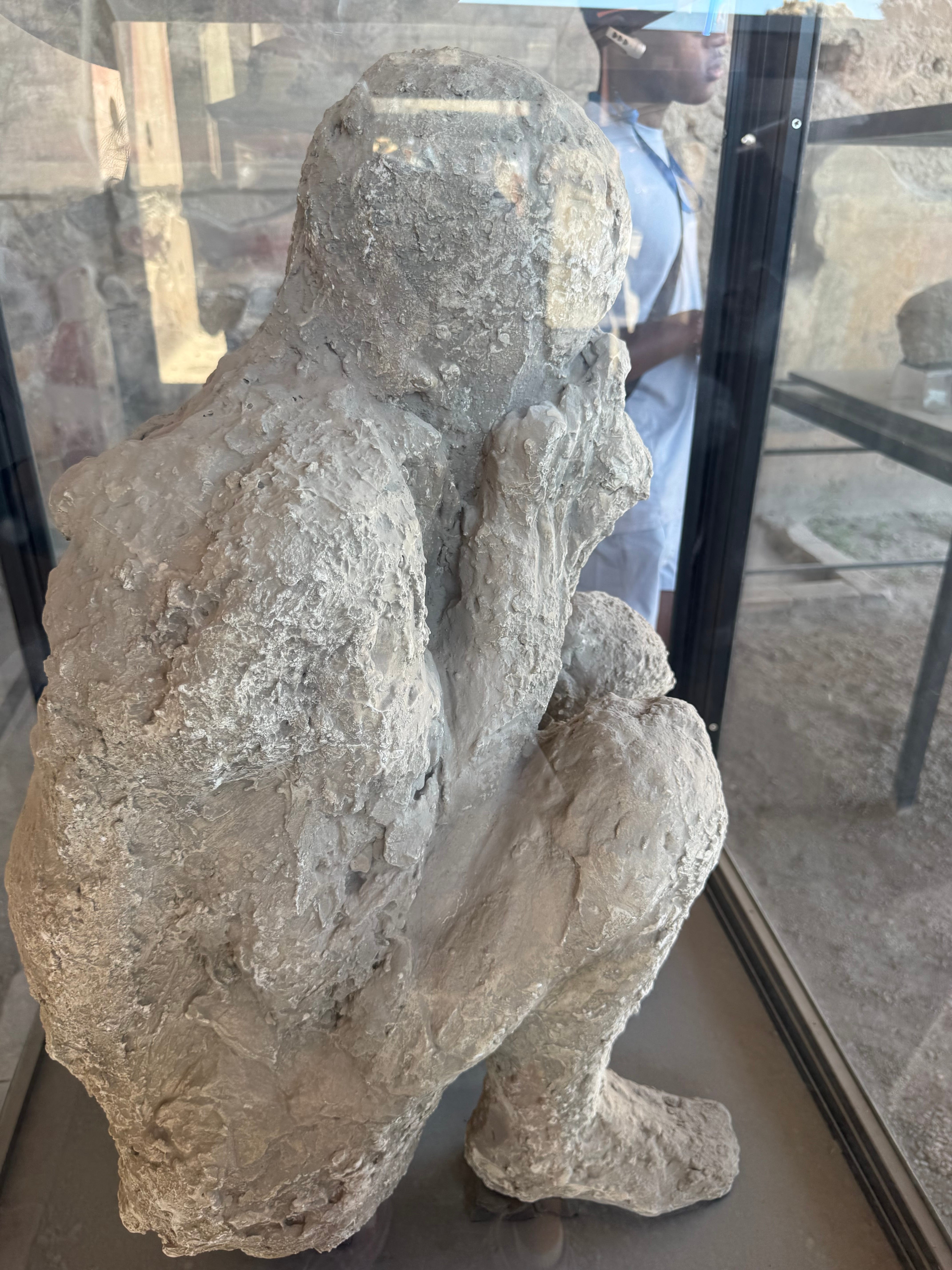
A sobering thought to bring to Pompeii, which we visited the next day, marveling at the ruins, the rapidity of an entire city’s obliteration, the painstaking work of thousands of archeologists over time who have excavated so much, given us so much to understand.
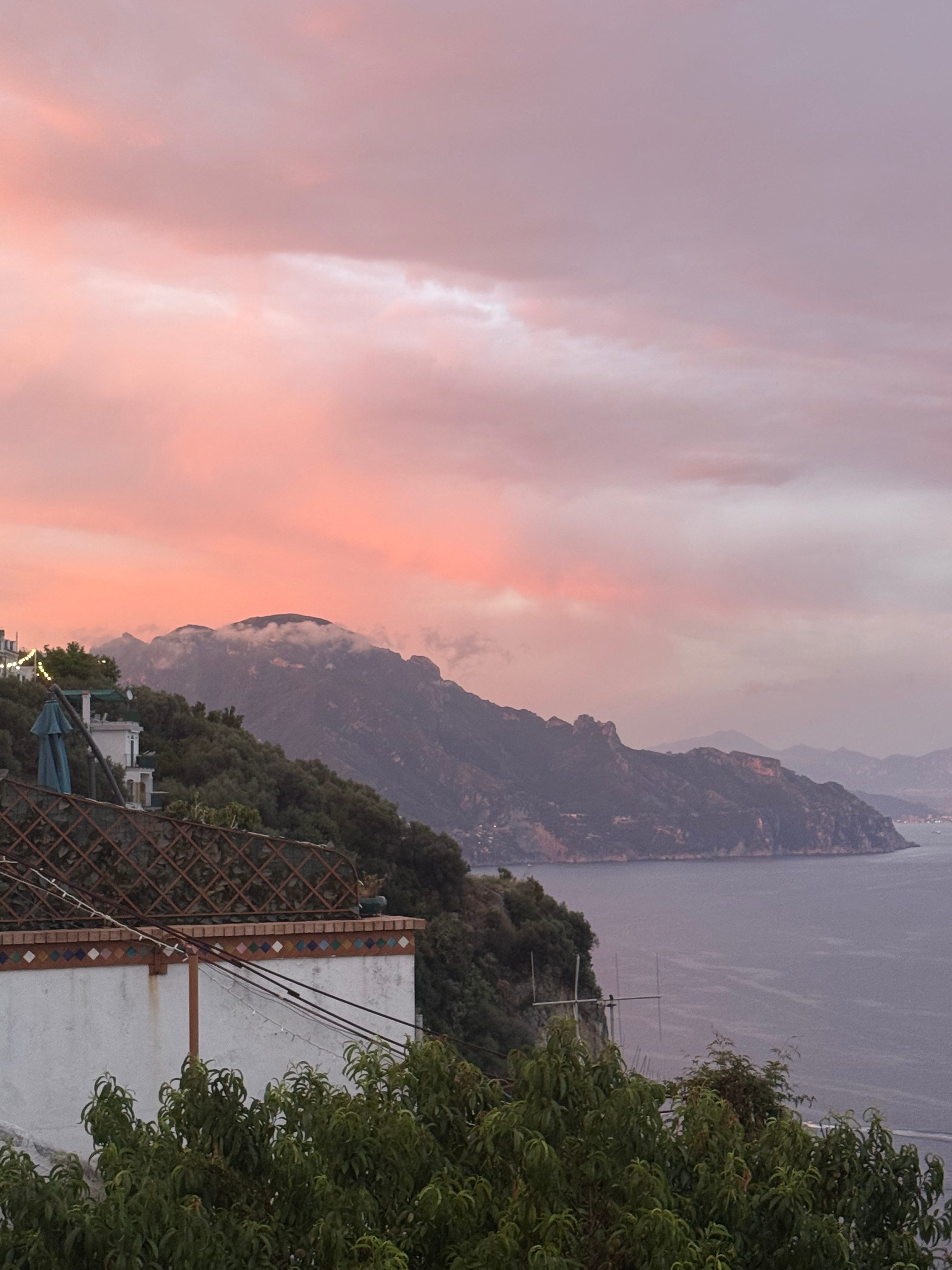
From there, we took a bus to Amalfi and a ferry to a tiny village called Conca dei Marini. This is the kind of place where the houses and roads and businesses are built right into the cliffside; where to get anywhere, your quads better be in tip-top condition. We gained 700 feet of altitude just to walk to the one grocery store in town to buy our chicken and basil for dinner. It was the most beautiful place I have ever seen in my life. I, a water-phobe, even swam in the Tyrrhenian Sea. We also made friends with our wonderful AirBnB host Domenico who drove the kids around in a Fiat the size of a bread box and introduced us to pretty much all 800 of Conca dei Marini’s residents.
Finally, we took a bullet train to Milan, a distance equivalent to going from Boston MA to Richmond VA. The train was packed to the gills, and we sat backwards, me with Johnny in one row; Tom and Lila in another. While Johnny watched something on his iPhone (they have chargers in every seat!), I finally opened my manuscript and started reading.
As I’ve written earlier, the new revision of The Big Idea is supposed to be a dual-POV structure, confining narration to just two characters: the lovers Liv and Peter. But the second part of the book features Peter’s two sisters, Rhodie and Zhsanna, in pivotal roles and arcs of their own. Though I could tell their stories from the points of view of their brother and Liv, it’s their interiority and the private moments they experience with other characters that make me laugh out loud and bring tears to my eyes. Theirs are the stories that I can’t stop thinking about. And their endings, in particular, are the ones that, if I were reading another writer’s novel, would make me kiss the book at the conclusion.
I re-read the most recent chapters and did not buy the changes I’d made to scenes that used to be narrated by one of the sisters. They simply don’t work as well in Liv’s or Peter’s points of view. Not only that, the rest of the book––Liv’s and Peter’s arcs––didn’t feel fully satisfying without being held within the prism that included the other two characters.
I wouldn’t be able to write the book I wanted to read, because I didn’t want to read only about my poor couple and all the tribulations they go through. I wanted also to write about the sisters.
What if––I wondered as I stared out at Tuscany flying by at 186 miles per hour––I could keep the original directive of that editor (which was to tell a decade-long story in one year) but stretch the two-POV rule to four? What if I came up with a way to bring the sisters back in right at the center of the book, and still kept the book to under a hundred thousand words?
A structure I used many revisions ago was to divide the book into four “sides,” as if it were a double LP of yore. Countless aficionados and fans have written about the Beatles “White Album” and how each side has a distinct personality: side one is upbeat rockers, side two is folky/country. Side three is blues and side four is avant-garde/experimental. So there exists an organic permission already for voices to be added as a story develops. A rock band is a unified entity while it works, while everyone shares a vision. But once it begins to splinter apart, different voices emerge.
By Milan, the splinters were showing. The kids were missing their friends. I wanted to work on my new idea for my book structure. Tom wanted to watch the World Cup.
I let the literary question rest for the remainder of the trip, but it followed me persistently as I traipsed after Johnny from shop to shop in the high-end shops with their view of the Duomo. He bought his dad two shirts as belated birthday presents (Tom REALLY needed new shirts, and he usually shops at the Hospice shop) and made him try on a new bathing suit (Tom’s bathing suit is from the 20th Century).
Katryna my sister had given me as a birthday present the directive to buy myself something beautiful in Milan. I spent the entire trip looking for something, but nothing appealed to me. Also, it was a week before Fashion Week, and there were models slinking about the city looking intimidatingly glam. I felt like a frumpy American. At the very end of the day, I saw this outfit which I fell in love with and my kids insisted I try it on. I did, and I felt immediately like one of Degas’ young dancers.


Italy clearly had sour grapes because they weren’t in the World Cup this year, and it was Day One, that last day in Milan. We walked all over the city trying to find a bar that was airing it on their TV. We finally found one in Chinatown. And that’s how we spent the last night of our Italian vacation. Here we were, the four of us, watching Senegal play France. Me, someone who would never watch soccer if it weren’t for the fact that my family loves the game. And there was nowhere on earth I’d rather have been and nothing on earth I’d have rather been doing.
Read on about my September Retreat and Morning Seeding & Tending, which is free to all paid subscribers to this newsletter.
Love, Nerissa
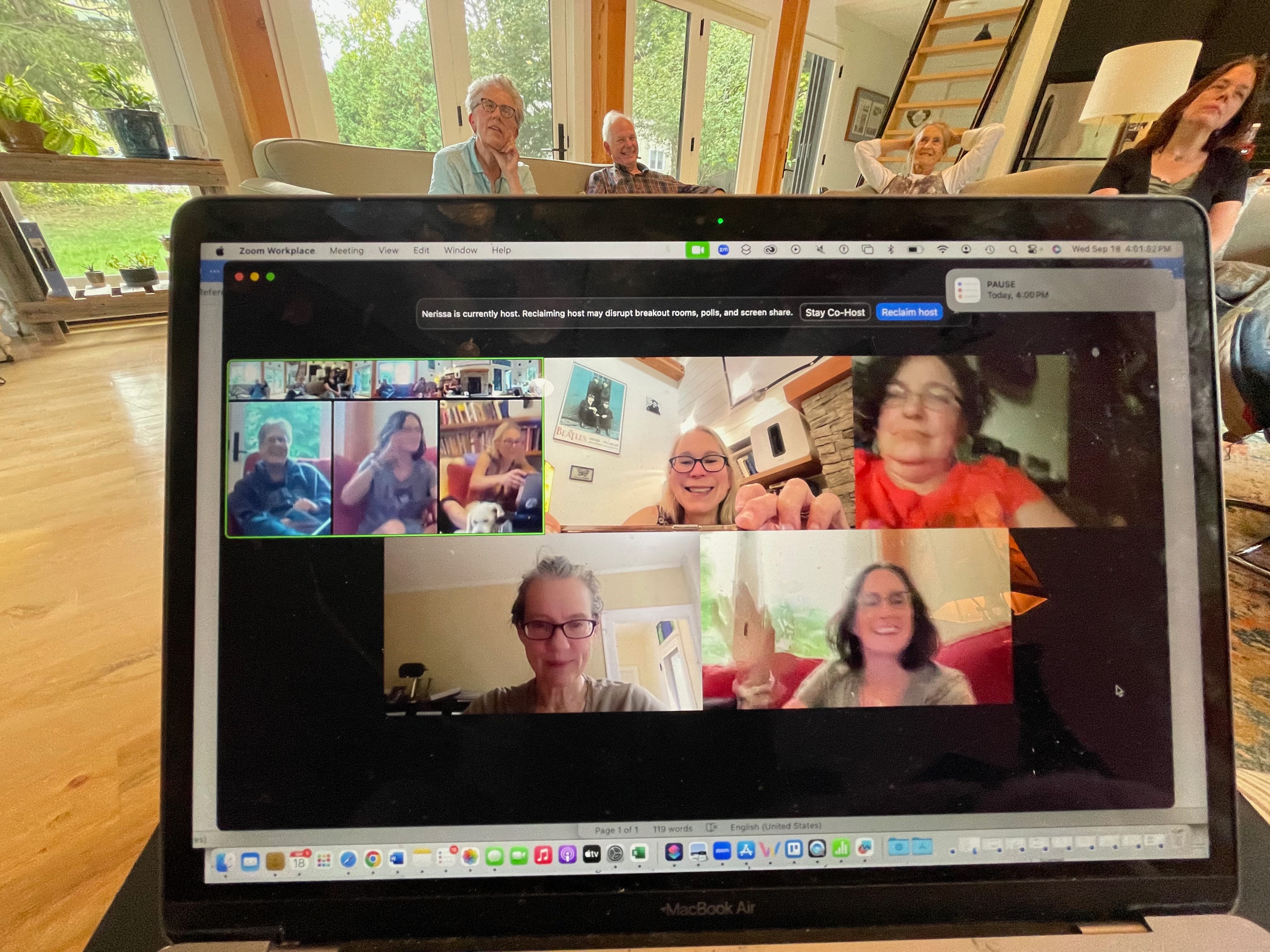
September Back-to-School Retreat
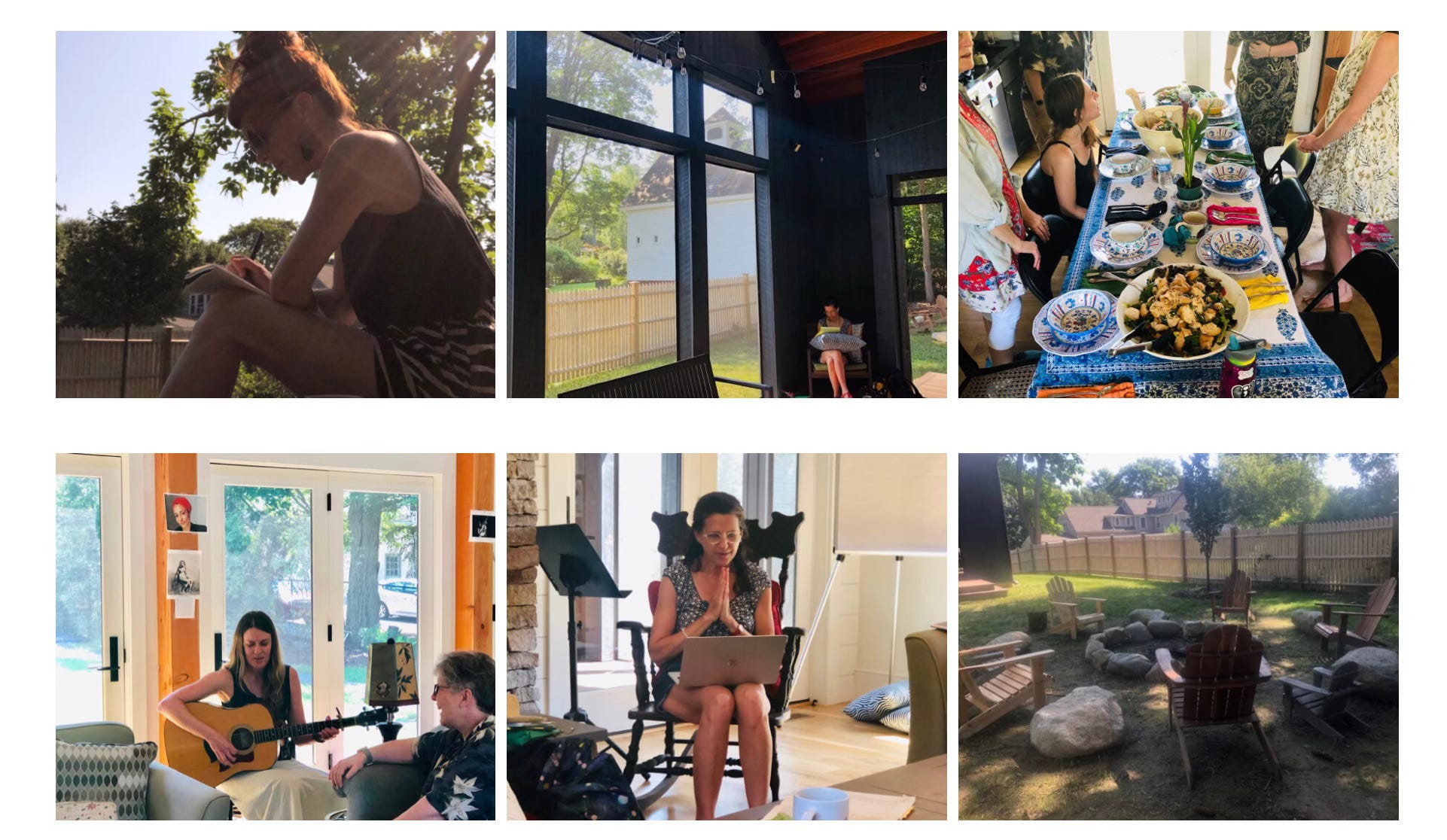
September 18-20, Join us in person or remotely for a transformative weekend dedicated to your writing. Whether you're diving into a memoir, starting a children's book, revising your novel, or simply craving the camaraderie of fellow writers, this retreat is your perfect escape. Hey! It’s not only the kids who get to go back to school. Buy some office supplies and come on over! More about the retreat here.
Morning Seeding & Tending
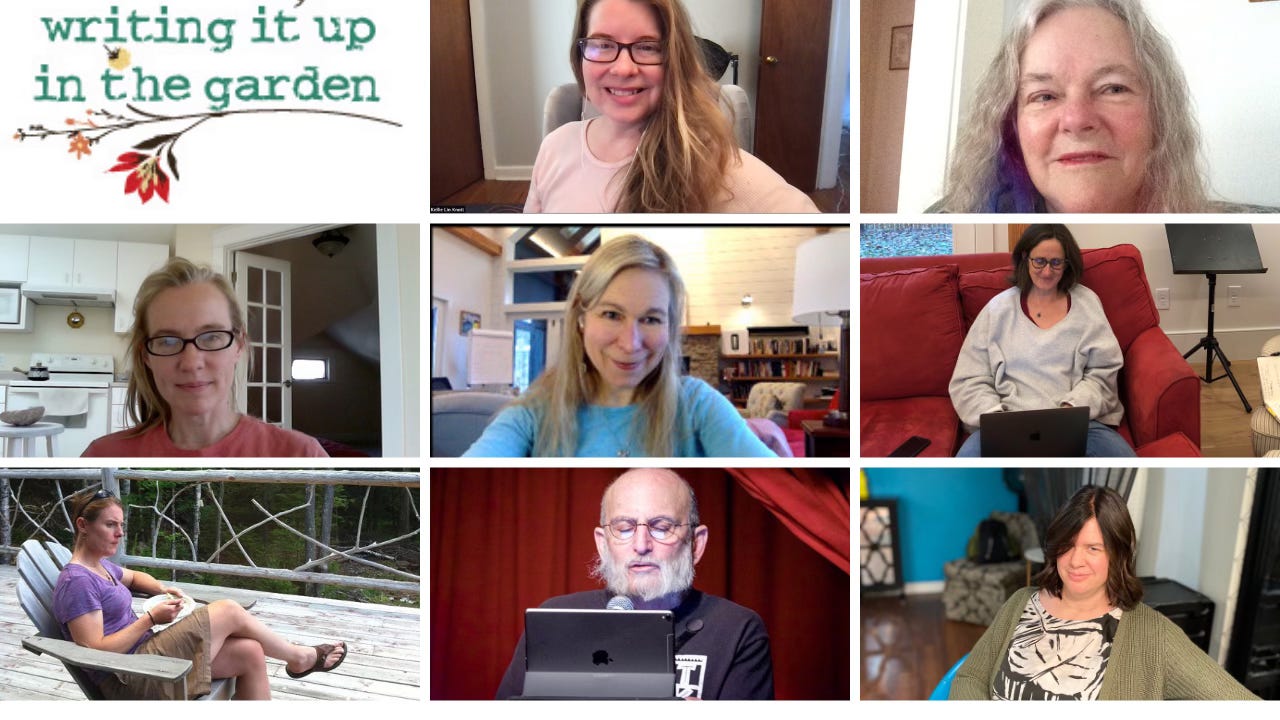
Morning Seeding & Tending, is an accountability group of dedicated writers who show up, set intentions in the chat, listen to a prompt (or not) and then get the writing quotient for the day done. “Done” being, at times, better than “brilliant and immortal.”
The Zoom room is open Monday-Friday 10am-11 am East Coast USA Time. We begin with a short greeting and prompt (quotation/poem fragment which will be emailed daily to all subscribers), then set intentions in the chat. We write with our microphones muted. If you arrive late, no problem. When the timer goes off at 11, we’ll say a quick goodbye. You can come late and/or leave Zoom early. You can mull over your plot and characters. Outline. Write a query letter, or submit for a fellowship. You can zip out 1000 words. Or write a series of Social Media posts, or blog. Or make a video. Or write a song. Or a recipe! It’s up to you. This is your time.
If you are already a paid subscriber, or if you presently become one, you’ll receive an email from WritingItUpInTheGarden@gmail.com inviting you to join the group. If you choose to join, respond with a “yes” and you’ll be added to the daily list, given the zoom address and daily prompts, and all that writing you were hoping to do would magically get done. I hope you will join us!
That dress! Love it!